“A journey through research, reflection, and reform — shaping knowledge that transforms policy and people.”


Exploring India’s Opium Histories: A Trilogy of Research and Reflection
This collection of works traces the complex and often misunderstood story of opium in India—from its colonial roots to its contemporary realities. Each book offers a distinct lens on how opium shaped economies, cultures, and human experiences across regions and generations. Together, they form a comprehensive narrative of India’s evolving relationship with one of its most historically significant substances.
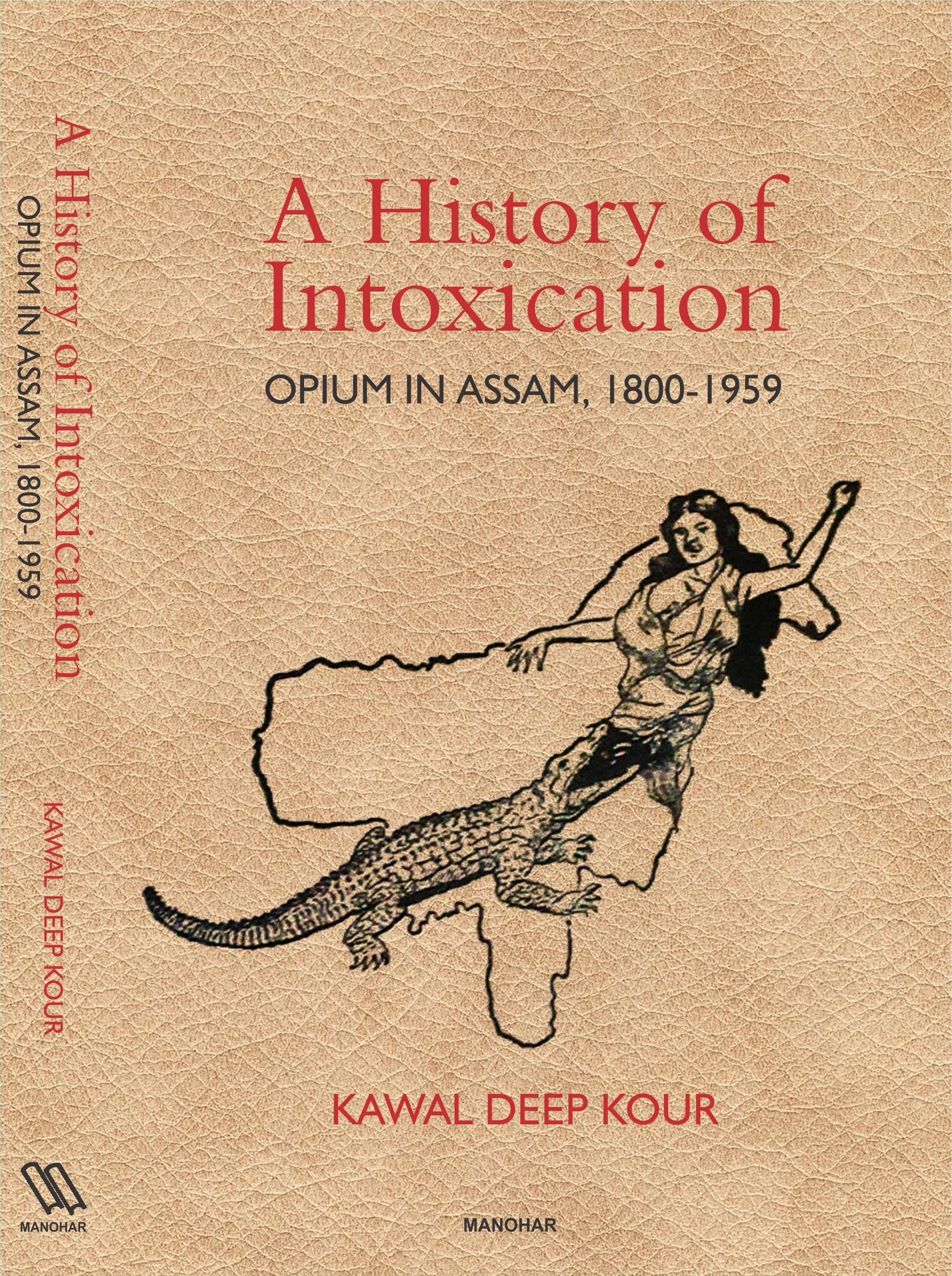
1. A History of Intoxication: Opium in Assam, 1800-1959 (2019)
Published by Manohar Books (India) and Routledge (UK, EU, US)
This pioneering study uncovers the lesser-known history of opium cultivation and consumption in Assam. Drawing on archival research, oral histories, and fieldwork, it explores how colonial trade policies and local practices intertwined to shape Assam’s socio-economic landscape. The book highlights the resilience of indigenous communities and their adaptive responses to shifting drug control regimes.
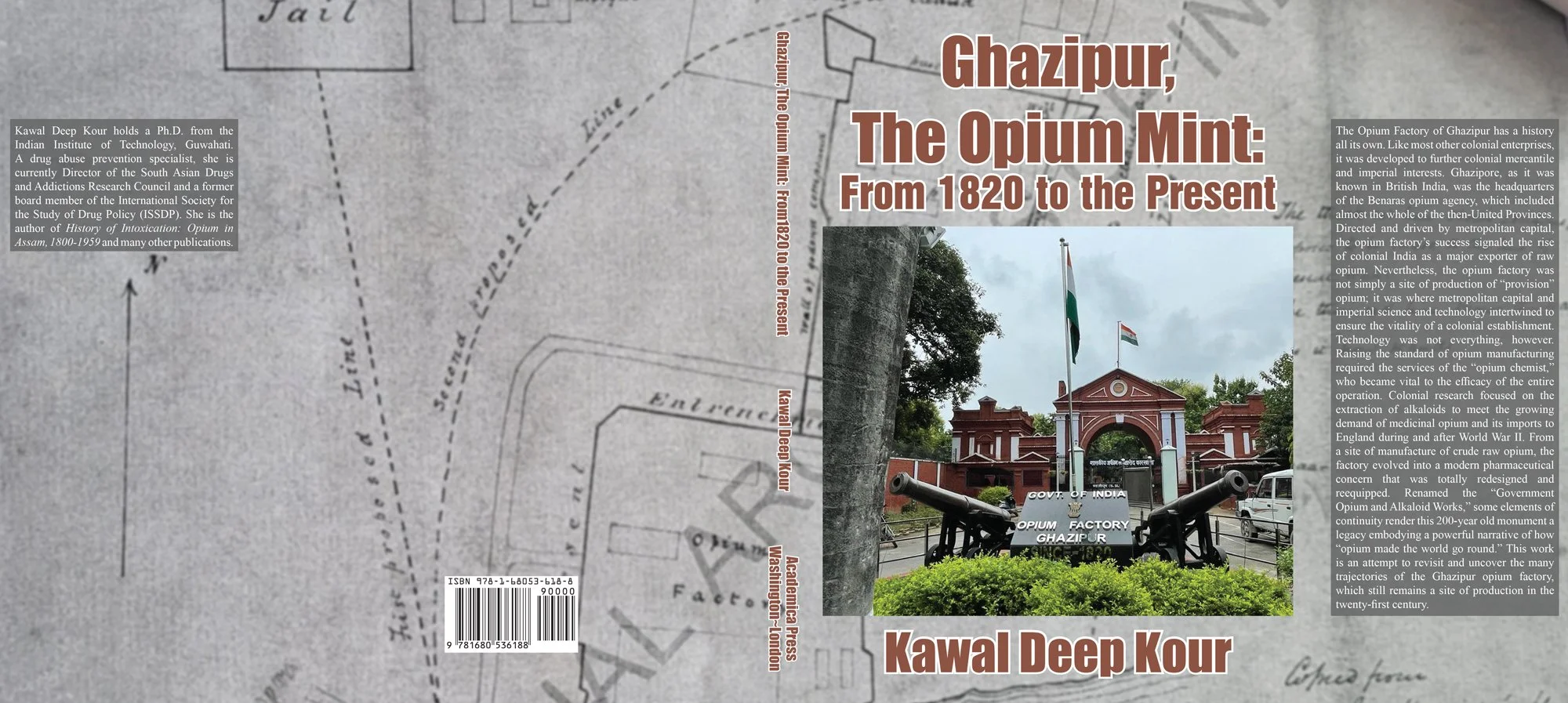
Ghazipur – The Opium Mint, From 1820 to The Present (2023)
Published by Academica Press ( Washington and London)
Set against the backdrop of India’s oldest functioning opium factory, this book offers a rare glimpse into the industrial and bureaucratic machinery of the global opium trade. It examines the Ghazipur Opium and Alkaloid Works as both a historical institution and a living symbol of India’s entanglement with colonial and postcolonial drug economies. Combining ethnographic observation with policy analysis, the book reveals how the legacy of opium production continues to influence India’s narcotics governance today.
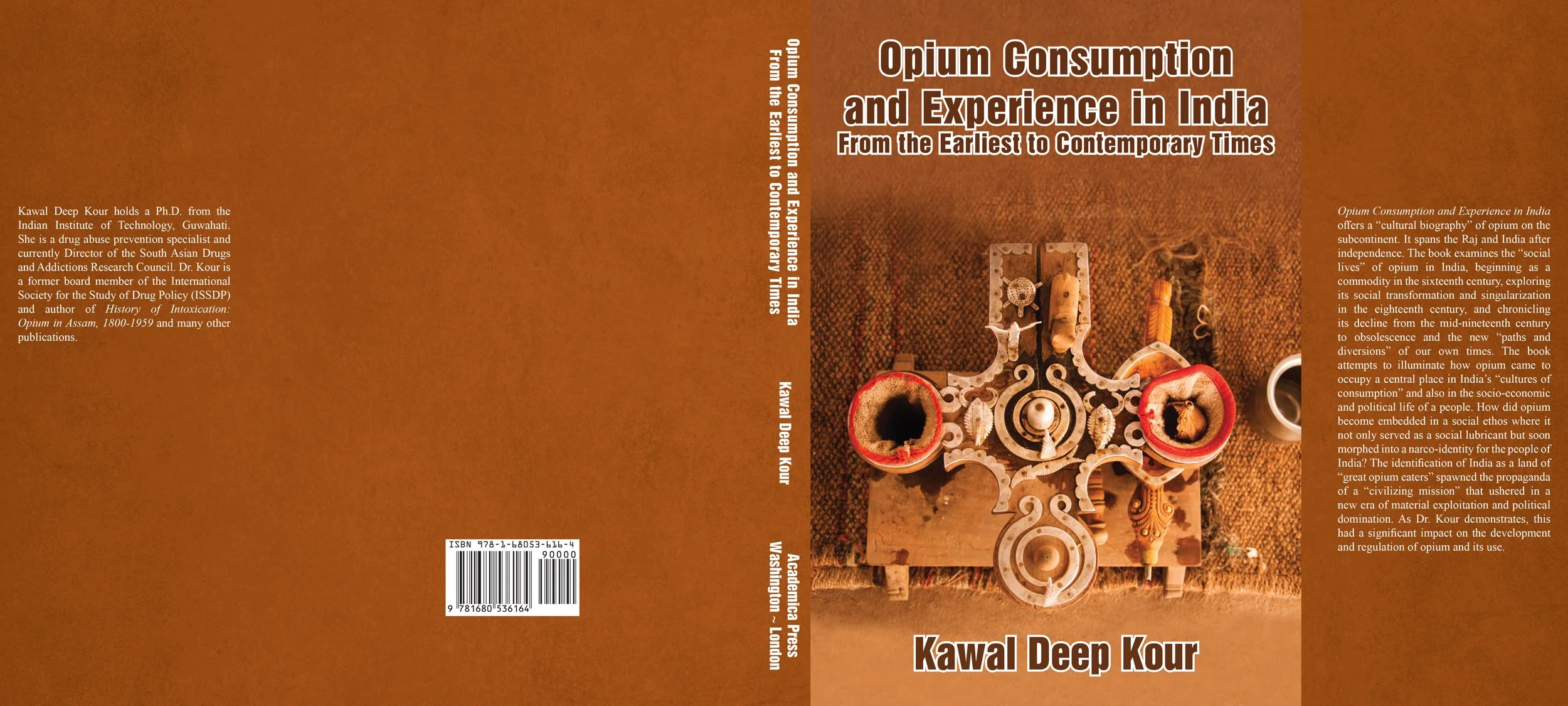
Opium Consumption and Experience in India: From the Earliest to Contemporary Times (2023)
Published by Academica Press ( Washington and London)
This volume shifts focus from production to people—documenting the lived experiences of opium users across India. Through ethnographic narratives, medical histories, and cultural analysis, it challenges stereotypes about addiction and morality. The book foregrounds the voices of users, healers, and communities, offering a nuanced understanding of opium as both a substance of dependence and a medium of meaning in Indian society.